
Professional Signature Style for Your Name: 10 Handwritten Ideas
Updated: Oct 6
Since 2022 I've designed signatures for more than 6,500 clients. In the notes of about 6,000 Etsy orders, 323 clients told me what they do for work: 82 business owners and executives, 62 lawyers and notaries, 33 nurses, NPs and PAs, 24 engineers and architects, 23 doctors, 20 therapists, 20 teachers and academics and 17 finance professionals.
This guide is built on what those clients actually asked for – and on what they said once their new signature was in use.
So what makes a signature look professional? In short: it is legible enough to be recognised, consistent enough to be repeated, and simple enough to write in two seconds. The ideas below show ten ways to get there, grouped by the kind of work you do.

What Makes a Signature Look Professional?
Before you choose a style, check your current signature against these four points:
Recognisable name. At least the first letter of your surname, or the overall shape of your name, should be readable. A scribble that could belong to anyone looks careless on a contract.
Consistent shape. A professional signature looks the same on the tenth document as on the first. Banks and HR departments compare signatures over the years.
Controlled flourishes. One confident loop or underline looks deliberate. Five loops across the whole name look messy.
Fits the space. Signature lines on forms are short. If your signature needs half a page, it will get squeezed and distorted.
What Professionals Actually Ask For (From 323 Client Orders)
When I group those order notes by job, each profession asks for something slightly different:
Lawyers and notaries: speed first. One attorney summed it up as "lots of signatures very quickly". Most want a clean style without thick lettering, often as initial + surname.
Nurses, NPs and PAs: they sign every day and initial charts many times per shift, so they ask for a legible signature plus a quick initials version. "Professional but pretty" came up again and again.
Doctors: many want their credentials ("…, MD") built into the design and a separate initial for charts. See real cases in our doctor signature client stories.
Executives and business owners: "bold but professional", "not too arty", "something a CEO would sign" – usually initial + last name.
Teachers and academics: no "fancy spiraling stuff", and quick initials for marking papers and notebooks.
Finance professionals: sharp or angular rather than curvy, and easy to repeat on every form.
Realtors: "simple and readable" for closing documents, often with a matching initial.
The free design requests tell the same story. Between May 2025 and October 2026, 1,455 people sent us a signature request through our website form. 86% said they need their signature for paperwork. Among the roughly 150 who mentioned their job, 60% ticked "Masculine" and 51% "Sharp" as their preferred style – compared with 44% and 45% across all requests – while only 19% chose "Feminine" (29% overall).
In their own words:
"I sign a lot of legal and recorded documents."
"Require signature to sign lots of academic certificates. An additional short (fast) version would be appreciated."
"I lead people, I command." – a pilot describing what their signature should say


10 Professional Signature Ideas
1. Initial + Full Surname
The most practical professional format: "J. Morrison" instead of "Jonathan Morrison". It stays readable, it is fast, and it works for every kind of document.

2. Full Name With a Gentle Right Slant
A full-name signature with a slight forward slant reads as confident and open. Keep the letter height even and connect the first and last name with a single stroke.

3. Strong Capital, Simplified Rest
Make the first capital large and clear, then let the remaining letters flow into a simplified line. Clients who sign many documents a day like this style because the capital carries the identity.

4. Anchoring Underline
A single horizontal stroke under the name works like a full stop. It makes even a short signature look finished. Keep it straight – a wavy underline looks less formal.

5. Monogram for High-Volume Signing
If you approve dozens of forms a day, a two- or three-letter monogram ("JM", "AKR") saves real time. Use it for internal approvals and keep a fuller version for contracts. More examples in our short signature ideas.
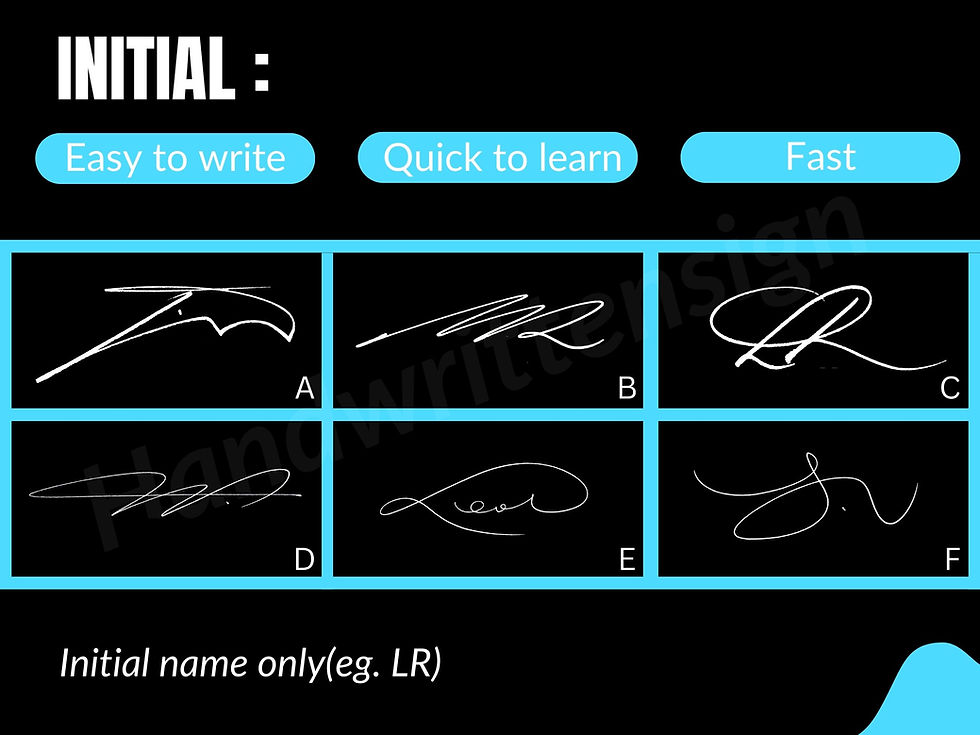
6. Bold, Angular Executive Style
Sharp angles and firm downstrokes come across as decisive. This is what many clients mean when they ask for a "masculine" or "executive" signature. Avoid overly round loops here.

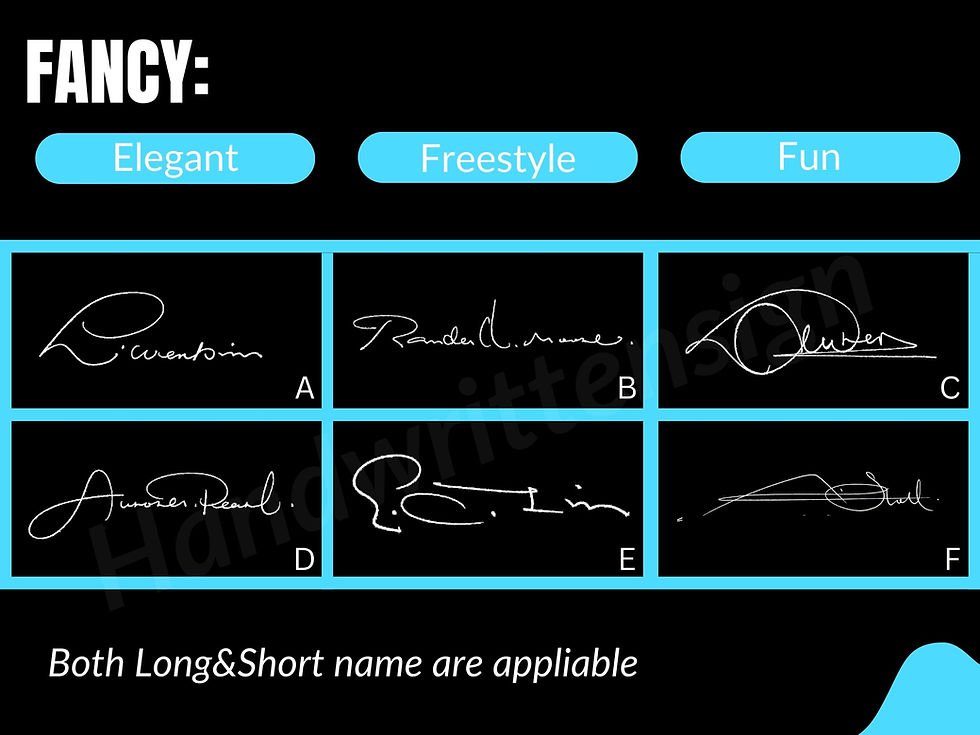
7. Elegant Cursive for Client-Facing Roles
Flowing, connected letters suit consultants, designers, real-estate agents and anyone whose signature appears in front of clients. Keep the cursive readable rather than calligraphic.
8. Print–Script Hybrid for Regulated Work
Lawyers, accountants and medical staff often sign documents that other people must be able to verify. A hybrid – clear printed capitals, lightly joined lowercase – keeps the name legible without looking childish.

9. Compact Signature for Small Signature Boxes
Bank slips, delivery notes and ID forms leave very little room. Design a version that fits in a box about 4 cm wide, so it never has to be squashed.

10. Signature + Matching Initials Set
The most complete professional option: one full signature for contracts and a matching set of initials for page-by-page initialling. Both share the same capital letter shapes, so they clearly belong together.
See a real example in our client story: dual business signatures.


Professional Signature Ideas by Profession
Executives and managers: bold capital + simplified surname (ideas 3 and 6). Avoid tiny, hesitant strokes.
Lawyers and finance: initial + surname or a print–script hybrid (ideas 1 and 8). Avoid illegible scribbles on filed documents.
Doctors and healthcare: a compact, legible signature (ideas 8 and 9). Avoid long flourishes that cross other fields.
Teachers and public sector: full name with a slant (idea 2). Avoid overly decorative cursive.
Creatives and consultants: elegant cursive with one flourish (idea 7). Avoid copying a font – it looks generic.
Small business owners: a signature + initials set (idea 10). Avoid using different signatures on different documents.
How to Choose Your Professional Signature Style
Count how often you sign. Many times a day → idea 3 or 5. A few times a month → idea 2 or 7.
Check where it will appear. Contracts and bank records need legibility; client cards and books can be more expressive.
Test it ten times. If the tenth version looks different from the first, simplify it.
Use it everywhere at once. Update your bank signature card first. Our guide on when to change your signature covers the order.
Want step-by-step practice? Read our guide on how to write a signature.
Using Your Handwritten Signature in an Email Signature
16% of the requests we receive are for an email signature, not just paper. A handwritten signature at the bottom of an email makes it feel personal – as long as it stays light and readable:
Use a transparent PNG. It sits cleanly on white and dark email backgrounds. (Our designs are delivered as PNG, and the full package adds an SVG vector file.)
Keep it small. Around 300–400 px wide is plenty; larger images get clipped on phones.
Put your typed details underneath. Name, title and contact details should stay as real text so they can be copied and read by screen readers.
Use the same design as on paper. Clients and colleagues should recognise one signature everywhere.
Want a version designed for email? See our email signature design.
What Professional Clients Said
A few of the Etsy reviews left by clients who told us their profession:
"Now I finally have a better-looking, and more formal signature for everything." – Doctor, USA
"Very fast and the worksheets work magic for getting the speed down." – Lawyer, USA
"I ordered 3 signatures they are all unique yet cohesive. Having the videos is amazing." – Business owner, USA
A teacher who had just changed their last name wanted "a cool signature to use at work" – after picking favourite styles, they ended up mixing elements from several designs into the final signature.


Get a Professional Signature Designed for Your Name
If you'd rather have a professional design made for your exact name, we hand-draw business signature designs with tutorial videos so you can learn to write it.
Frequently Asked Questions
What is a professional signature?
A professional signature is a handwritten signature that stays recognisable, looks the same every time and fits on standard forms. It usually shows at least your surname or its first letter clearly.
Should a professional signature be legible?
Partly. It doesn't have to be perfectly readable, but someone should be able to connect it to your name. Fully illegible signatures can cause problems with banks and official documents.
Is it better to sign with initials or my full name?
For contracts and official documents, use your full signature (or initial + surname). Initials are fine for internal approvals and for initialling each page of a contract.
Can I change my signature for a new job?
Yes. You can change your signature at any time. Start using the new version consistently and update your bank's signature card.
Can I use my handwritten signature in my email signature?
Yes. Add it as a small transparent PNG above your typed name and title. Keep the typed text so your contact details stay readable and searchable.


Comments